
Off-Grid Solar Ventilation for Global Supply Chain Heat Resilience
Major brands are increasingly exposed to extreme heat risks in their overseas manufacturing supply chains. Target’s 2025 Sustainability and Governance Report specifically calls out extreme heat as a pressing challenge for frontline operations. At the same time, global studies show that heat-related productivity losses and supply chain disruptions create ripple effects that reach all the way back to buyers.
- Documented productivity losses from heat — studies show output drops ~2% per °C above certain thresholds in factories.
- Brands face growing pressure on worker conditions, human rights due diligence, and Scope 3/resilience reporting.
- Full HVAC electrification/retrofits are often prohibitively expensive and infrastructure-heavy for many foreign suppliers (especially smaller or older facilities). Grid dependence creates vulnerability exactly during peak heat events.
- Global studies (e.g., Nature 2024) show extreme heat costs propagate through supply chains, hitting developing-country manufacturing hard and creating ripple effects for buyers.
The SunCooler™ offers a fundamentally different approach. As a fully off-grid solar-battery powered industrial air handling system, it delivers powerful high-velocity turbulent airflow for real thermal relief without requiring facility electrification, major electrical upgrades, or expensive conventional HVAC. It can be shipped, installed, and scaled across supplier networks quickly and cost-effectively — giving brands and their partners a practical way to improve working conditions and strengthen supply chain resilience in heat-vulnerable regions.
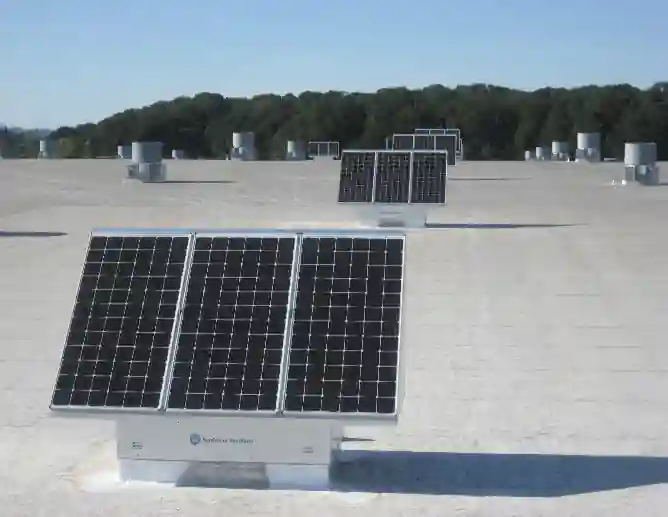
SunCoolers delivering powerful off-grid ventilation on industrial rooftops.
How the SunCooler™ Addresses Heat-Related Challenges in Global Supply Chains
Extreme heat in overseas manufacturing facilities creates serious challenges for worker comfort, productivity, and compliance. The SunCooler™ tackles these issues by delivering powerful high-velocity turbulent airflow throughout the facility, creating meaningful thermal relief at the occupant level without requiring full facility electrification or conventional air conditioning.
High-Velocity Airflow and Perceived Temperature Reduction
Moving air at higher velocity directly over occupants significantly improves how people perceive temperature. Increased airflow accelerates both convective and evaporative cooling on the skin, which can make workers feel several degrees cooler even when the actual air temperature remains high. This effect helps counteract the documented productivity losses that occur as temperatures rise — losses that studies have shown can reach approximately 2% per degree Celsius above comfortable thresholds in factory environments.
Unlike simple recirculation systems, the SunCooler can also bring in fresh outdoor air. This air typically arrives at much lower CO₂ levels (around 400 ppm), with lower humidity and fewer accumulated pollutants than stagnant indoor air. The combination of high-velocity airflow plus cleaner, cooler, fresher air provides a stronger reduction in heat stress and improves overall occupant comfort.
Read more about how high-velocity airflow improves heat tolerance and perceived comfort →
Four Operating Modes for Hot Manufacturing Environments
Exhaust Mode pulls hot ceiling air and accumulated contaminants out of the building, helping to reduce overall heat load and improve air quality in large manufacturing spaces.
Induction Mode pushes fresh outside air directly into the facility. This mode is particularly effective for rapidly introducing cooler, cleaner air into targeted work areas during the day, quickly improving occupant comfort and reducing heat stress in specific zones.
Nightflush Mode brings in cooler nighttime air to flush out stored heat from the building. This pre-cools the facility’s thermal mass so it starts the next day at a lower temperature, delaying the worst effects of daytime heat and giving workers better conditions from the beginning of their shift.
Destratification Mode (with optional fresh air mix) keeps air moving by directing ceiling air down to the occupied zone. This prevents hot air from stratifying at the ceiling and maintains consistent airflow over workers. The system can be programmed to introduce a controlled amount of fresh outside air when conditions are favorable.
Supporting Worker Welfare and Audit Compliance
By improving airflow and reducing heat stress, the SunCooler helps suppliers create better working conditions. This directly supports efforts to meet heat-related requirements in social compliance audits and buyer codes of conduct. Brands gain a practical way to demonstrate proactive support for worker welfare across their supply chains.
The system operates completely off-grid, allowing it to continue providing ventilation even during grid brownouts or blackouts — situations that commonly occur during extreme heat events in many manufacturing regions.
How the SunCooler™ Addresses Electrification Challenges and Energy Resilience During Heat Waves
One of the biggest barriers to improving conditions in overseas manufacturing facilities is the high cost and complexity of full electrification and conventional HVAC retrofits. Many suppliers operate in regions with unreliable electrical grids that frequently experience brownouts or blackouts — especially during extreme heat events when ventilation and cooling are needed most. Traditional grid-tied systems often fail exactly when they are required, forcing suppliers to rely on expensive diesel generators.
Fully Off-Grid Operation Removes the Electrification Barrier
The SunCooler™ operates completely independently of the facility’s electrical system. Because it is powered by its own solar array and battery backup, there is no need to upgrade electrical service, run new wiring, install conduit, or obtain electrical permits inside the building. This dramatically lowers both the upfront cost and the operational complexity compared to traditional HVAC electrification projects.
Suppliers can deploy effective high-velocity ventilation and heat mitigation without waiting for major infrastructure upgrades or grid improvements that may never come.
Continued Performance During Grid Brownouts and Blackouts
Heat waves often coincide with peak electrical demand, leading to rolling blackouts and brownouts in many manufacturing regions. Grid-dependent fans and cooling systems shut down at the worst possible time. The SunCooler continues operating through these events, maintaining airflow and thermal relief for workers even when the grid is unavailable.
Nightflush mode can run during cooler nighttime hours using stored energy, pre-cooling the building without drawing power from an already stressed grid. This helps facilities start each day in better thermal condition and reduces the overall load on any existing systems.
Lower Cost and Greater Resilience Than Conventional Solutions
Full HVAC electrification projects in foreign facilities are often prohibitively expensive and require significant ongoing energy consumption. The SunCooler provides a targeted, lower-cost alternative that focuses on the most critical need: powerful airflow and heat mitigation where workers are located.
By eliminating the need for major electrical infrastructure while delivering reliable performance during grid disruptions, the SunCooler helps suppliers maintain productivity and worker comfort with far less capital investment and operational risk. Brands benefit from more resilient supply chains that are less vulnerable to heat-related disruptions.
How the SunCooler™ Is Well Suited for International Deployments
Global supply chains often involve dozens or hundreds of supplier facilities spread across multiple countries. The SunCooler™ is specifically designed to be practical and scalable in these real-world international environments.
Modular and Scalable by Design
The SunCooler is a modular system. Suppliers and brands can start with a small number of units in the most critical areas and easily scale by adding more units as needed. There is no requirement for complex centralized systems or major redesigns when expanding coverage. This makes it straightforward to roll out across multiple facilities or to grow coverage within a single large manufacturing site over time.
Simple Shipping and Rapid Installation
SunCooler units are designed for straightforward container shipping and rooftop drop-in installation. The process typically involves cutting a roof penetration, setting the unit in place, and activating it. Most of the work occurs on the roof with minimal disruption to ongoing production inside the facility. This approach has proven effective in a wide range of building types and has been successfully deployed in demanding environments around the world.
Rugged and Low-Maintenance for Harsh Conditions
Manufacturing facilities in hot climates often face high temperatures, humidity, dust, and other challenging conditions. The SunCooler is built with durable industrial components and a robust housing designed to withstand these environments year after year. Once installed, the system operates autonomously with programmable scheduling, reducing the need for constant manual oversight.
Secure, Simple Local Control
Control is handled through a closed local network using short-range WiFi or a direct USB connection. There is no requirement for internet access or cloud connectivity. This design is often preferred for international sites due to security, reliability, and simplicity. Local facility teams can monitor performance, adjust schedules, and download operational data using intuitive software, while brands can maintain oversight without complex IT integration.
The SunCooler works alongside any existing ventilation or minimal cooling systems already in place at supplier facilities, making it a flexible addition rather than a complete replacement.
Measurable Benefits for Brands and Suppliers
Deploying the SunCooler™ across supplier networks delivers tangible benefits for both the facilities themselves and the brands that rely on them.
Benefits for Suppliers
- Improved worker comfort and safety: Powerful high-velocity airflow reduces heat stress, helping workers stay more comfortable and focused even during hot periods.
- Reduced risk of production disruptions: Continued operation during grid brownouts helps maintain output when traditional systems fail.
- Lower risk of audit failures: Better airflow and heat mitigation supports compliance with heat-related requirements in social audits and buyer codes of conduct.
- Lower energy costs: Reduces or eliminates the need to run expensive diesel generators for ventilation during outages.
- Simpler and more affordable upgrade path: Achieves meaningful improvements in working conditions without the high capital cost and complexity of full HVAC electrification.
Benefits for Brands
- Stronger supply chain resilience: Facilities equipped with the SunCooler are less likely to experience heat-related slowdowns or stoppages, improving delivery reliability during extreme weather events.
- Progress on worker welfare commitments: Provides a practical, visible way to support better conditions in supplier facilities and demonstrate action on human rights and heat stress in the value chain.
- Support for ESG and climate goals: Contributes to Scope 3 resilience efforts and shows proactive climate adaptation support for suppliers in high-risk regions.
- Cost-effective approach: Delivers meaningful heat mitigation and ventilation at a significantly lower cost than full HVAC electrification projects across multiple supplier sites.
- Flexible deployment: The modular nature allows brands to prioritize the highest-risk facilities first and scale over time based on results and budget.
By combining off-grid reliability, high-velocity airflow, and easy scalability, the SunCooler offers a pragmatic solution that improves conditions on the ground while helping brands manage both operational and reputational risks in their global supply chains.
Ready to Strengthen Your Supply Chain’s Heat Resilience?
Help your overseas suppliers combat extreme heat without the high cost and complexity of full electrification. The SunCooler™ delivers powerful off-grid ventilation and thermal relief that continues working during grid brownouts — improving worker conditions, supporting audit compliance, and strengthening supply chain resilience at a fraction of the cost of traditional HVAC solutions.
Request Supply Chain Heat Resilience Study & Quote →Call Jason in Sales at 503-515-3317 or email jason@nwrec.us or info@nwrec.us
Frequently Asked Questions
1. How does installing SunCoolers at supplier sites help us meet our heat stress or worker welfare requirements?
The SunCooler delivers powerful high-velocity airflow that directly reduces heat stress on workers. By improving thermal comfort and air movement, it helps suppliers create better working conditions and supports compliance with heat-related expectations in social audits and buyer codes of conduct.
2. What’s the rough cost difference compared to helping suppliers install conventional HVAC or electrify their facilities?
The SunCooler is significantly more affordable than full HVAC electrification projects. Because it is fully off-grid, there is no need for expensive electrical infrastructure upgrades, wiring, or permits inside the facility. This makes it a much more practical option when working with many suppliers across different regions.
3. Can the SunCooler work effectively in very humid climates common in Southeast Asia and South Asia?
Yes. The system is designed to perform in hot and humid environments. Nightflush mode brings in cooler nighttime air to reduce indoor temperatures and humidity buildup, while high-velocity airflow helps improve perceived comfort even when humidity levels are high. Induction mode can also be used to introduce fresher air when beneficial.
4. How scalable is this across dozens or hundreds of supplier factories?
Very scalable. The SunCooler is modular, so you can deploy units based on priority and budget. Many facilities start with coverage in the hottest or most critical areas and expand over time. The same system can be rolled out across multiple countries and supplier sites without requiring complex centralized infrastructure.
5. What kind of data or reporting does the system provide that could support our ESG or Scope 3 disclosures?
Each SunCooler can log operational data including runtime, modes used, and environmental conditions. This information can be downloaded and used to demonstrate proactive measures taken to support worker welfare and supply chain resilience in ESG reporting.
6. Does it require internet or cloud access at the supplier site?
No. The SunCooler uses a closed local network with short-range WiFi or direct USB connection. There is no internet or cloud connectivity required, which is often preferred for security and reliability at international supplier locations.
7. How much maintenance is involved, and can local teams handle it?
Maintenance is relatively simple and can typically be handled by local teams with basic training. The system is designed for long-term operation with serviceable components. Routine checks are straightforward, and the off-grid design means there are no complex electrical systems to maintain inside the facility.
8. Can SunCoolers work alongside any existing fans or minimal ventilation the supplier already has?
Yes. The SunCooler is designed to complement existing systems. It can replace older grid-powered exhaust fans or work alongside them, providing additional high-velocity airflow and the ability to operate independently during grid outages.
9. How disruptive is installation to daily production?
Installation is generally low-disruption. Most work is done on the roof with a simple drop-in process. In most cases, production inside the facility can continue with minimal interruption. The entire on-site installation for a typical deployment is often completed within a short timeframe.
10. What kind of support does NWREC provide for international projects?
NWREC offers full turn-key support, including assessment, system design, installation coordination, training for local teams, and ongoing performance optimization. We work with brands and their suppliers to develop practical deployment plans tailored to specific regions and facility types.