
Solar Ventilation for Heat Mitigation & Energy Savings for High-Bay Commercial Facilities
High-bay warehouses, distribution centers, big-box retail stores, and other high volume manufacturing facilities across the U.S. face rising energy costs from stratification, outdated rooftop exhaust fans, and increasing pressure for climate adaptation and heat mitigation. Facility engineers and sustainability teams need practical, sustainable solutions that modernize ventilation without major electrical upgrades or operational disruption.
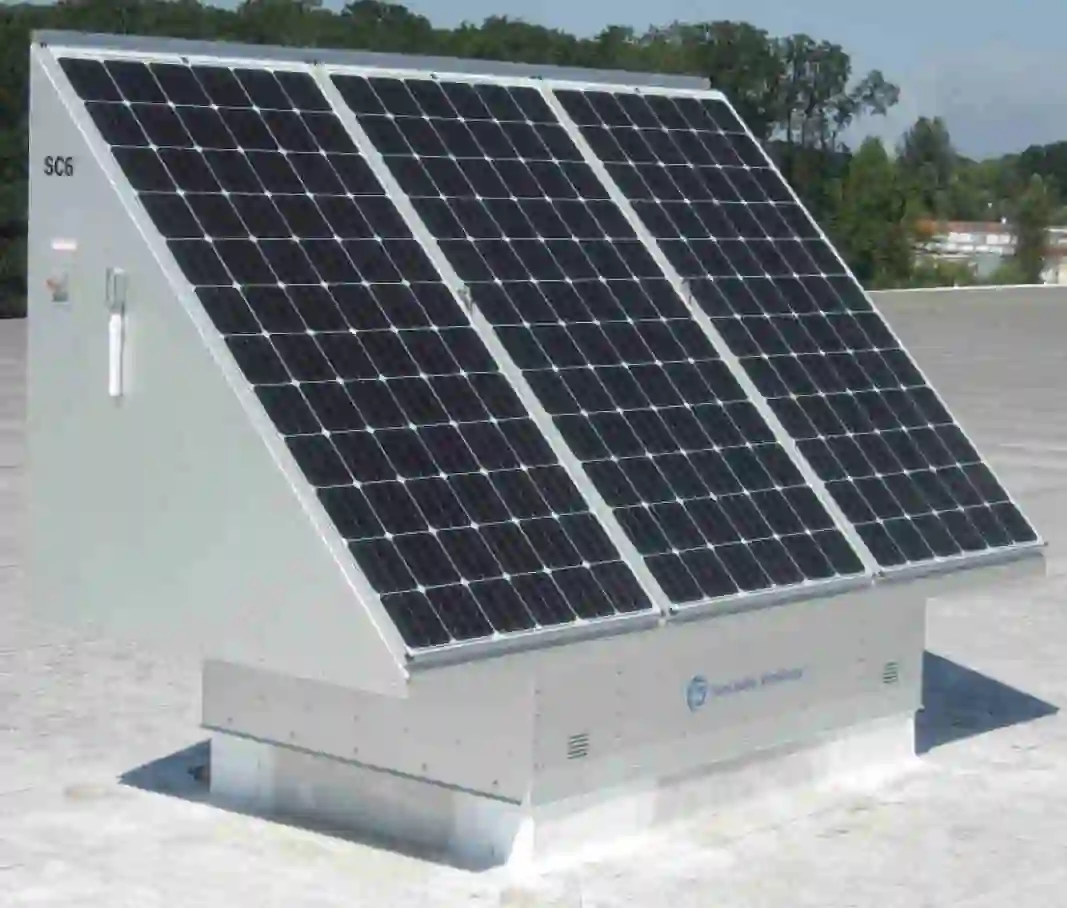
The SunCooler™ is the only fully off-grid industrial-scale solar ventilation HVAC system purpose-built for high-bay, high volume structures. Rooftop installation. No wiring. No electrical permits. It replaces legacy grid-powered exhaust fans, provides powerful high velocity ventilation throughout the whole facility, and delivers powerful destratification for up to 30% heat energy savings. The SunCooler is the commercial green technology solution for climate adaptation and heat mitigation in modern high-bay facilities solving numerous Indoor Air Quality (IAQ) challenges alltogether, seen below.
- Replace Grid-Powered Exhaust Fans: Swap out old rooftop exhaust fans with advanced solar ventilation with no service-panel upgrades required.
- Proven Green Technology Modernization: Fully off-grid solar with battery backup. Zero wiring, zero electrical permits.
- Climate Adaptation & Heat Mitigation Strategy: Powerful airflow for worker comfort plus destratification that cuts heating costs up to 30%.
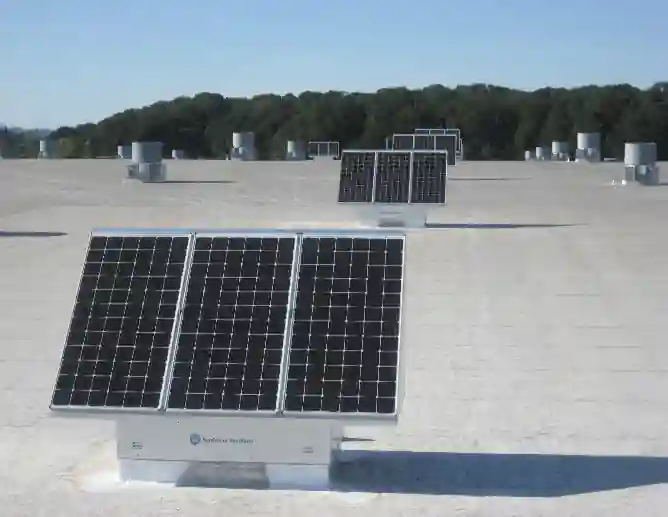
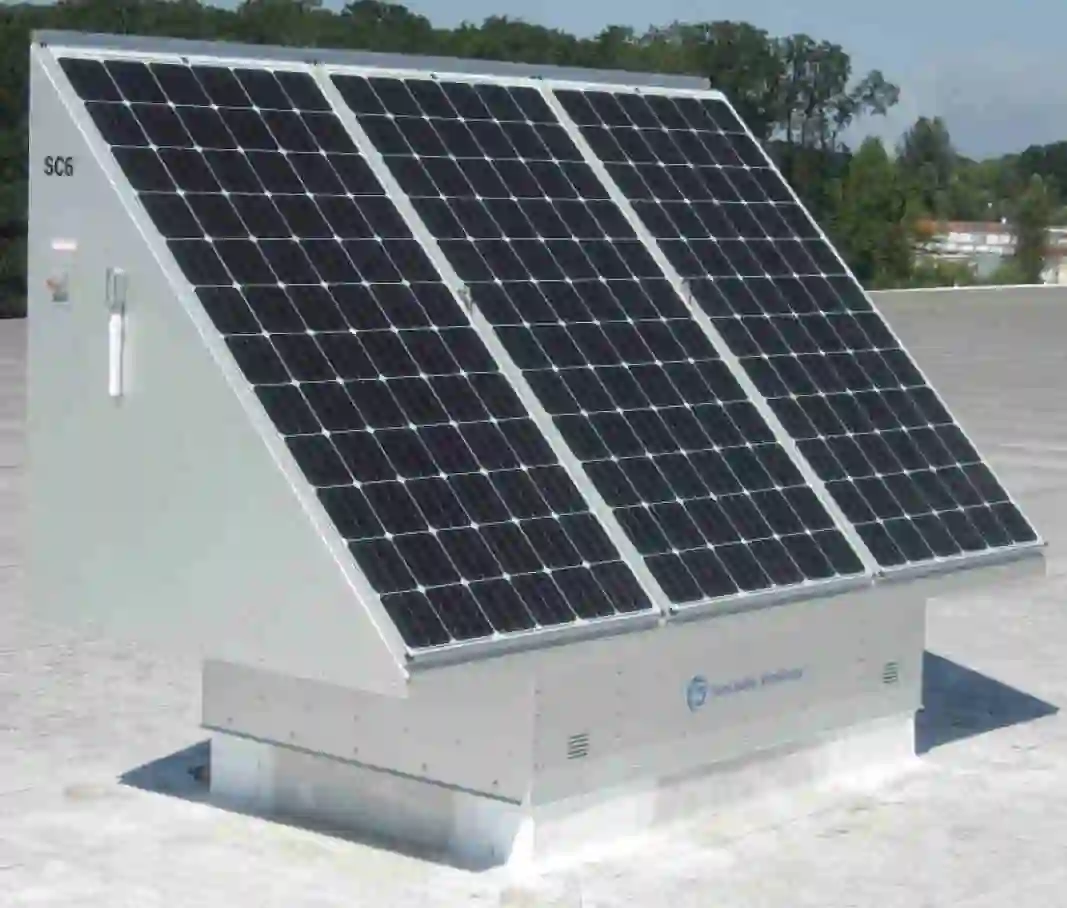
SunCoolers on a Target regional distribution center.
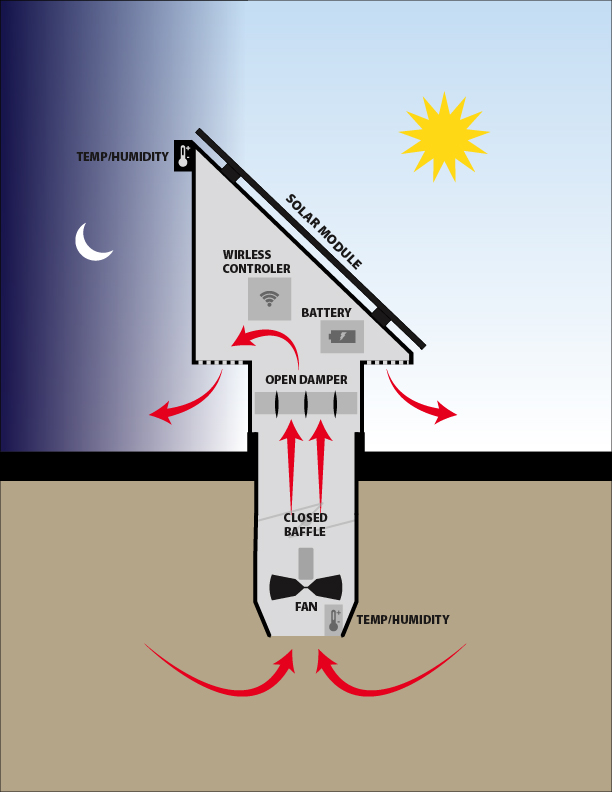
SunCooler illustration of exhaust mode that replaces legacy exhaust fans.
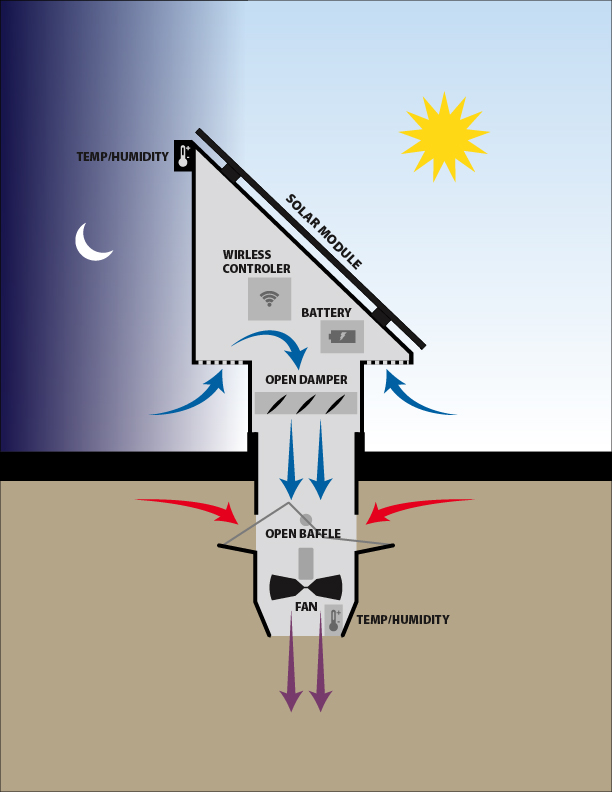
SunCooler illustration of destratification energy savings and fresh air mix.
The High-Bay Indoor Air Quality & Climate and Heat Related Challenges
High-bay warehouses, distribution centers, and big-box facilities face persistent indoor air quality and thermal challenges that reduce worker comfort, productivity, and Environmental, Social, and Governance (ESG) performance.
Primary Challenges
- The SunCooler Solves Temperature Stratification is when hot air rises to the 30–40 ft ceiling, leaving workers in the cold while wasting heating energy at the ceiling. The SunCooler addresses this through turbulent destratification.
- The SunCooler solves heat-related challenges from climate change by providing off-grid ventilation that mitigates heat-related illness and maintains resilience during grid brownouts.
- The SunCooler Solves Stagnant Air & CO₂ Buildup that creates indoor air quality dead zones causing headaches, fatigue, and reduced employee focus.
- The SunCooler Solves Airborne Contaminants such as cardboard dust, packaging particulates, forklift tire wear, airborne plastics, propane forklift emissions, and diesel truck exhaust at loading docks that affect employees.
- The SunCooler Solves VOCs & Chemical Off-Gassing from adhesives, foams, plastics, cleaning products, and stored inventory that affect employees.
- The SunCooler Mitigates Humidity & Mold Risk, especially in transition zones and humid climates.
- The SunCooler Mitigates Seasonal Wildfire Smoke Infiltration by keeping dampers sealed while maintaining internal air movement.
- The SunCooler Solves Offshore Supply-Chain Resiliency Challenges in developing nations that are critical to product supply chains and facing rising temperatures.
Health & Employee Impact
- The SunCooler Mitigates Heat Stress, Exhaustion, Dizziness, and Nausea especially during summer heat waves when indoor temperatures often exceed 85–100°F.
- The SunCooler Mitigates Headaches, Reduced Concentration, and the “Sick From the Air” Feeling commonly reported by workers.
- The SunCooler Mitigates Respiratory Irritation and Breathing Difficulties caused by dust, tire wear, emissions, and VOCs.
Key Business Impacts
- The SunCooler delivers Strong ESG and Investor Alignment with measurable sustainability, worker-welfare improvements, and supply chain resiliency meeting corporate renewable energy and climate adaptation objectives.
- The SunCooler Improves Productivity and Morale by providing thermal relief and improved indoor air quality.
- The SunCooler improves the employee experience to reduce heat related and indoor air quality related Absenteeism, Turnover, and Training costs.
- The SunCooler Lowers Heating Fuel and HVAC Electrical Energy Bills by reducing the load on HVAC systems compensating for stratification, replacing all grid powered exhaust fans, and reducing existing HVAC cycle times.
- The SunCooler reduces maintenance costs and premature equipment wear on existing or planned HVAC systems operating in extreme temperature swings.
High-Bay Distribution Centers & Fulfillment Warehouses
These 30–40 ft tall, high-volume facilities are the backbone of modern supply chains. They are often under-ventilated, with massive open spaces that create extreme temperature stratification, constant airborne contamination, and CO₂ buildup during winter months when the building is sealed tight.
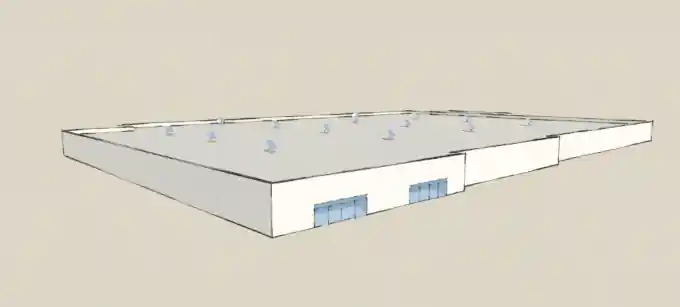
Summer Heat & Nightflush Pre-Cooling Strategy
Summer-time poses many heat-related challenges to underventilated high-bay facilities even when pre-existing HVAC is present. Grid brownouts during heat waves can shut down exhaust fans, chillers, and swamp coolers, sharply increasing heat-related risks for employees. The SunCooler's off-grid, high-velocity ventilation that provides psychrometric cooling for the occupants at the floor level is essential for high-temperature climate resilience by mitigating heat stress and heat related illness and injury.
The SunCooler solves these challenges with two of its modes: Exhaust Mode and Nightflush Mode.
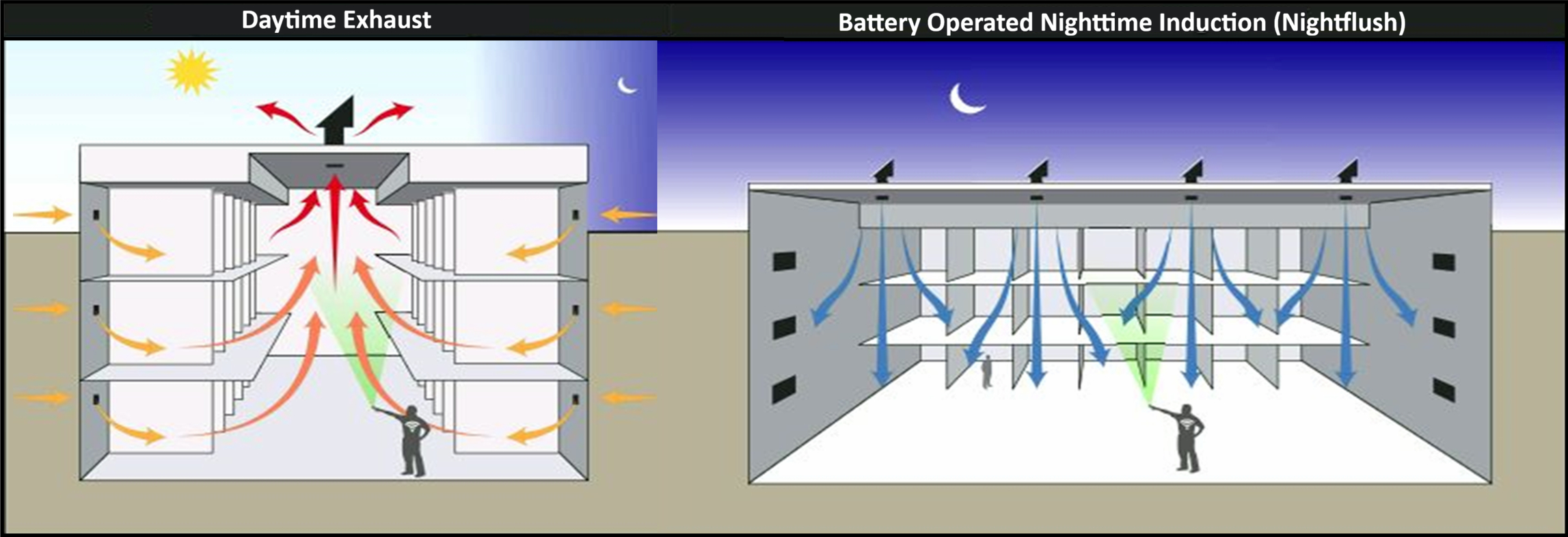
Exhaust Mode from the SunCooler replaces all grid-powered exhaust fans to provide powerful, off-grid ventilation. The hot ceiling air is pulled out of the facility creating negative pressure to draw in cooler ground level air through open doors and windows providing a rush of fresh air all day for the employees and mitigating their risks of heat related illness. Installing SunCoolers also liberates valuable electrical capacity on the facility service panel by removing the grid-powered exhaust fans.
Nightflush Mode from the SunCooler leverages the 10–25°F temperature drop at night to induce air into the building (rather than exaust) to flush out the facility with cooler nighttime air. This cools both the thermal mass of the structure, its contents, and the large volume of hot air inside so the facility starts the following morning significantly cooler. The result is a smooth transition into exhaust airflow during the day and a meaningful delay in the start-up of existing HVAC systems which reduces peak energy demand and energy costs, and lengthening HVAC equipment life during heat waves. Night-shift crews enjoy the cool air, and day-shift employees arrive to brisk, fresh air. Because this operation is solar-battery powered, the SunCooler refreshes the high-bay facility irrespective of grid brownouts which improves supply chain resiliency.
Humidity Control & Mold Risk
The SunCoolers induce high velocity fresh air into a facility to improve air circulation and breaks up humidity concentrations lowering mold risk in transition zones and cold-storage areas. The SunCooler is equipped with temperature and humidity sensors to automatically control the humidity inside the facility smartly leveraging the differences of tempereature and humidity of indoor and outdoor air.
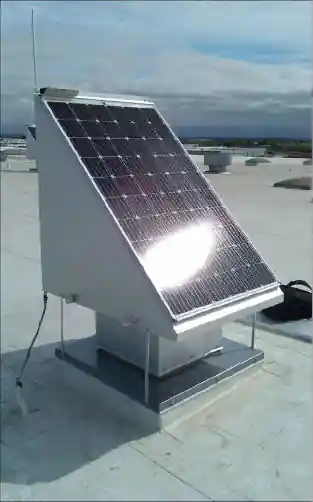
Dozens of SunCoolers managing humidity and temperature on a military high-bay MRE storage facility performing exhaust and nightflush. SunCoolers removed the need for swamp coolers to manage temperature on this monsterous structure which keeps humidity down and lengthens product shelf-life.
Offshore Supply-Chain Resiliency Challenges
Corporations may equip their partners in developing nations with SunCoolers who are vulnerable to extreme heat and do not have sufficient local eletric grid faculties for conventional HVAC. The rapid and strategically simple deployment of SunCoolers is a strong improvment to supply chain resiliency by providing those workers with high velocity psychrometric cooling. Even in humid climates, the psychrometric effect of high velocity airflow is proven to help occupants feel cooler during heat-waves. This concept is exactly how NWREC is remediating the heat crisis for correctional facilities that were never designed for HVAC and is likewise very effective for developing nations with foreign supply chain elements.
Temperature Stratification & Winter Heating Energy Savings
Hot air rises and pools at the ceiling, forcing heaters to run longer to warm the occupant level where workers may be cold and uncomfortable.
Destratification Mode from the SunCooler uses the patented indoor plenum for High Velocity Turbulent Destratification (HVTD) engineered to deliver more assertive air mixing than conventional destratification fans. This instantly eliminates 30-40 foot temperature gradients, improves floor-level occupant comfort, and reduces heat energy costs by up to 30%.1
Fog demonstration showing the destratification airflow pattern of the SunCooler™ in a high-ceiling environment during a cloudy northern hemisphere winter day. Note: Video has no audio.
During a pilot test at a large commercial building, facility crew and management stood directly beneath the SunCooler. When we wirelessly activated the system from 30 feet above, it delivered a powerful, high-velocity air column straight down to the floor. The strong showering airflow impressed everyone and management expressed an enthusiastic “wow!”
CO₂ Buildup, Stagnant Air & Dead Zones in Closed Winter Operations
When the building is sealed for winter, CO₂ levels steadily rise from human activity, propane forklifts, and product off-gassing. Large open volumes create dead zones with poor air circulation, leading to headaches, fatigue, reduced concentration, and the common “sick from the air” feeling reported by workers.
The SunCooler addresses these challenges with its Destratification Mode with fresh-air mix capability by continuously breaking up dead zones and introducing regulated fresh air to dilute CO₂. NWREC recommends for high-bay facilities the optional CO2 sensor module for the SunCooler to automatically regulate its outdoor damper from 0-100% for fresh air mix based on interior CO2 levels; or, the fresh air mix % can simply be a manual setting.
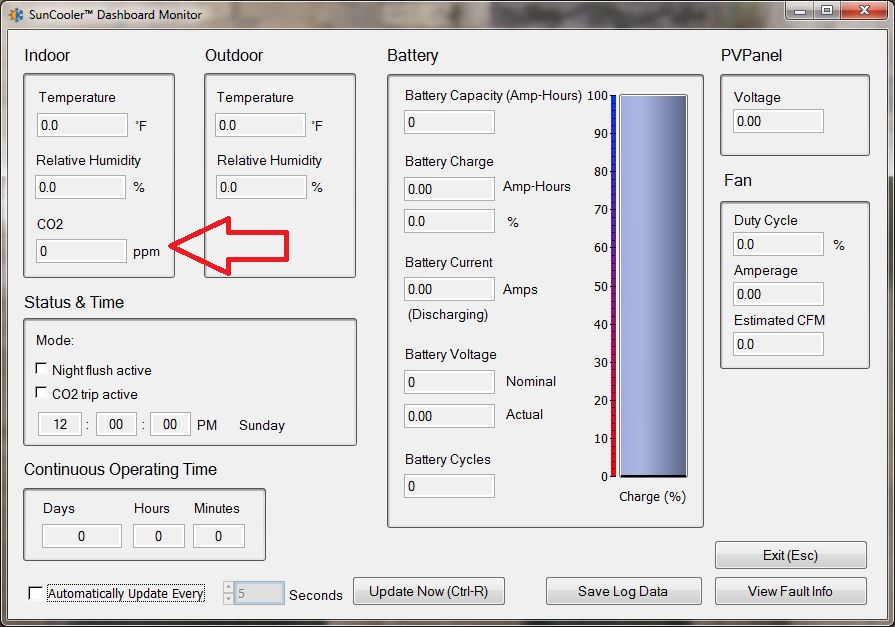
SunConfig software system real-time monitor view. Live CO2 readout is pointed out by the red arrow.
The unique capability of the SunCooler is not only the fresh air mix but how facility maintenance can monitor air quality and CO2 at each SunCooler and adjust setpoints local to specific zones of the facility to address employee indoor air quality reports of headache inducing stale air. Facilties with dead zones can have the SunCoolers local to that area push air into that zone and break up that stagnation for good.
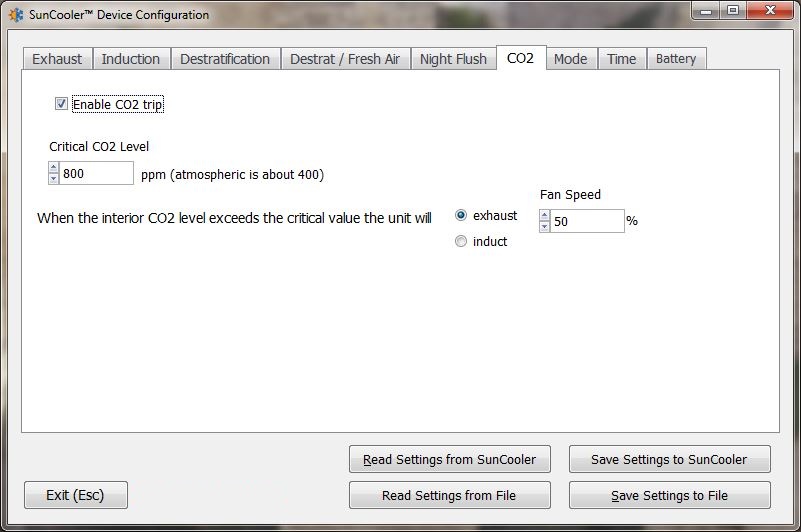
SunConfig software CO2 settings for automatic trigger when CO2 reaches a certain concentration.
Real-Time Facility Monitoring with High-Resolution Environmental Sensors
Every SunCooler is equipped with a convenient indoor LED display for maintenance to read its status from the ground level inside the high-bay facility. The SunCooler has suite of environmental sensors such as indoor and outdoor temperature & humidity sensors with the recommended CO2 sensor module and an optional pressure sensor. When a hundred or more units are installed across a large facility, they create a high-resolution sensor network that provides live monitoring and historical data logging from each SunCooler location that can be monitored at a central point via signal hopping. Facility teams can track temperature, humidity, and, with optional CO₂ and pressure sensors, both indoor and outdoor conditions in real time, enabling precise optimization and proof of performance for ESG reporting.
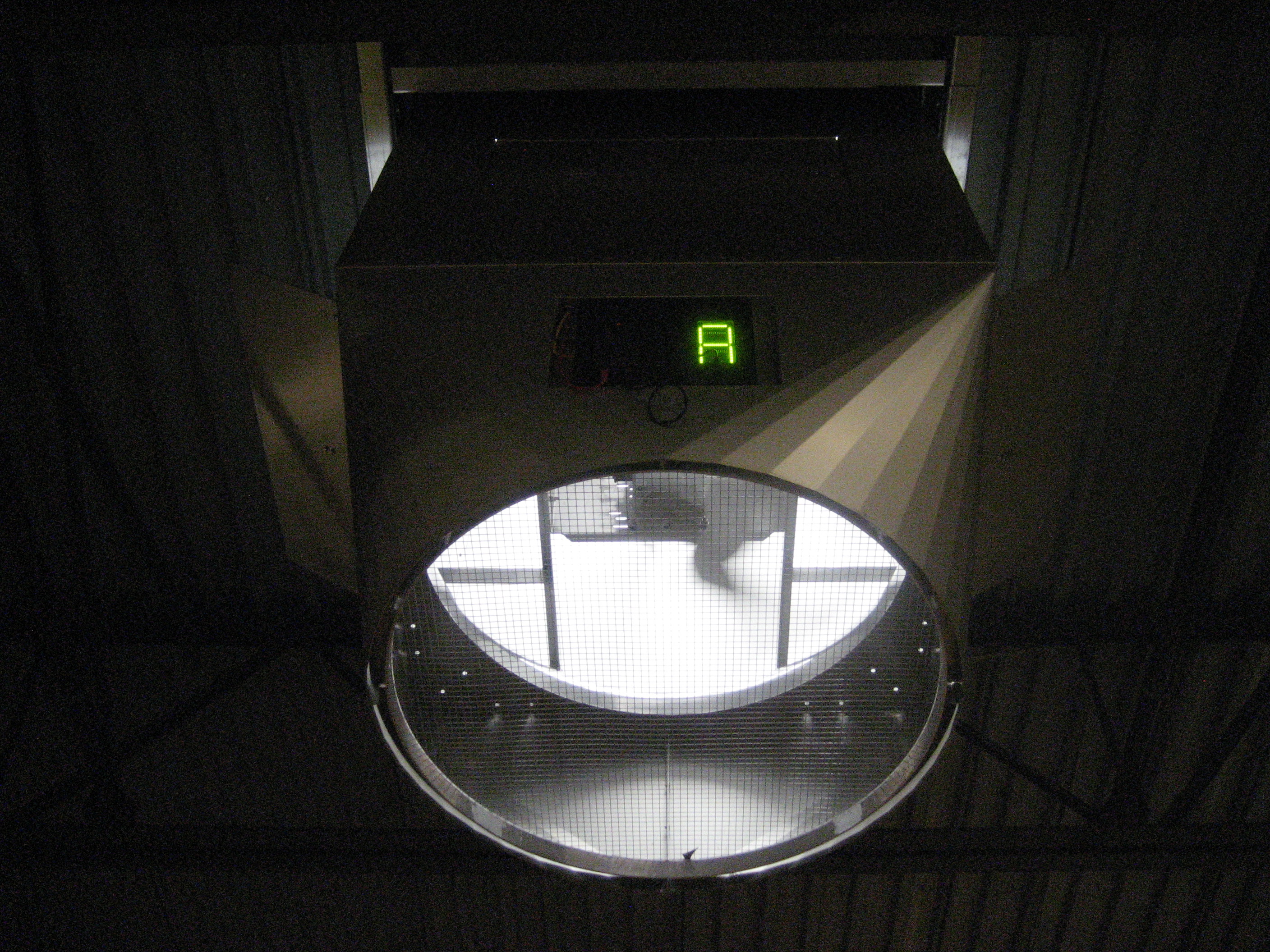
View of the SunCooler's Destratifier LED that is quite legible from 30-40ft high indicating operating mode, error codes, and other information.
Airborne Contaminants in a High Bay Facility & Forklift/Truck Exhaust at Loading Docks
Cardboard dust, packaging particulates, forklift tire wear, propane forklift emissions, Volatile Organic Compounds and product off-gassing, and diesel truck exhaust at loading docks create constant IAQ challenges. These contaminants settle on product and equipment while workers inhale them, leading to respiratory irritation, frequent complaints, and in some cases higher employee turnover or increased sick leave.
Exhaust Mode from the SunCooler rapidly pulls these contaminants out at the source before they migrate deeper into the facility. High-velocity airflow prevents settling and keeps the entire volume cleaner and more breathable.
At the loading docks, SunCooler Induction Mode in the summer and Destratification Mode in the winter, with regulated fresh-air mix, is the the solution for vehicle exhaust compaints by loading dock workers. In the summer, local SunCoolers at the loading docks can run in Induction Mode (even when facility-wide SunCooler operation is in exhaust mode) to push clean and fresh outdoor air directly onto personnel at the docks. This creates a local high pressure column of air right where workers stand to push out diesel truck exhaust and other airborne contaminants. During the winter the SunCooler can operate in Destratification Mode with or without partial fresh air mix to keep that clean air at the docks without pulling in cool outdoor air to maintain indoor heating setpoints, and, this destratification brings the warm ceiling air to the dock workers to warm them.
Seasonal wildfire smoke events: SunCoolers can be instructed to keep their outdoor dampers fully sealed (0% fresh air mix) while still running in destratification mode to provide essential air movement to breakup deadzones and provide high velocity airflow over employees for evaporative cooling (psychrometry) for thermal relief without bringing outdoor smoke into the facility. Maintanence can monitor the smoke and manually instruct SunCoolers to mix fresh air when smoke has lifted temporarily, and turn off fresh air mix when the smoke approaches again. This control feature is a fine expression of how the SunCooler is the next generation of industrial ventilation to provide indoor air quality improvements even in inclimate conditions.
At the loading docks, employees often describe the air as “heavy” and “hard to breathe” from the constant mix of truck exhaust and forklift fumes. The SunCooler changes that experience dramatically.
Measurable Worker Health, Productivity & ESG Impact
By continuously moving and exchanging air, the SunCooler reduces heat stress, respiratory irritation, headaches, fatigue, and the “sick from the air” feeling reported by workers. The result is higher productivity and morale, lower absenteeism and turnover, and measurable ESG/sustainability improvements that directly support investor and corporate mandates.
As a fully off-grid solar + battery system, the SunCooler keeps delivering comfort during extreme heat waves and grid brownouts when traditional HVAC fails. Target, Walmart, and Amazon have all committed to net-zero by 2040 and aggressive renewable-energy goals. Target’s 2025 reports specifically call out “extreme heat” as a pressing risk to frontline operations and worker wellbeing. The SunCooler delivers exactly the resilient, renewable, low-disruption ventilation they need and because it requires no grid connection it is also ideal for suppliers in developing nations, strengthening your entire supply chain against climate risks.
Built for Commercial & Industrial Environments
Every SunCooler unit stays completely off-grid on the roof. Zero interior wiring. Zero conduit. Perfect for 24/7 high-bay operations where downtime is not an option.
Engineered for Reliability and Resilience 
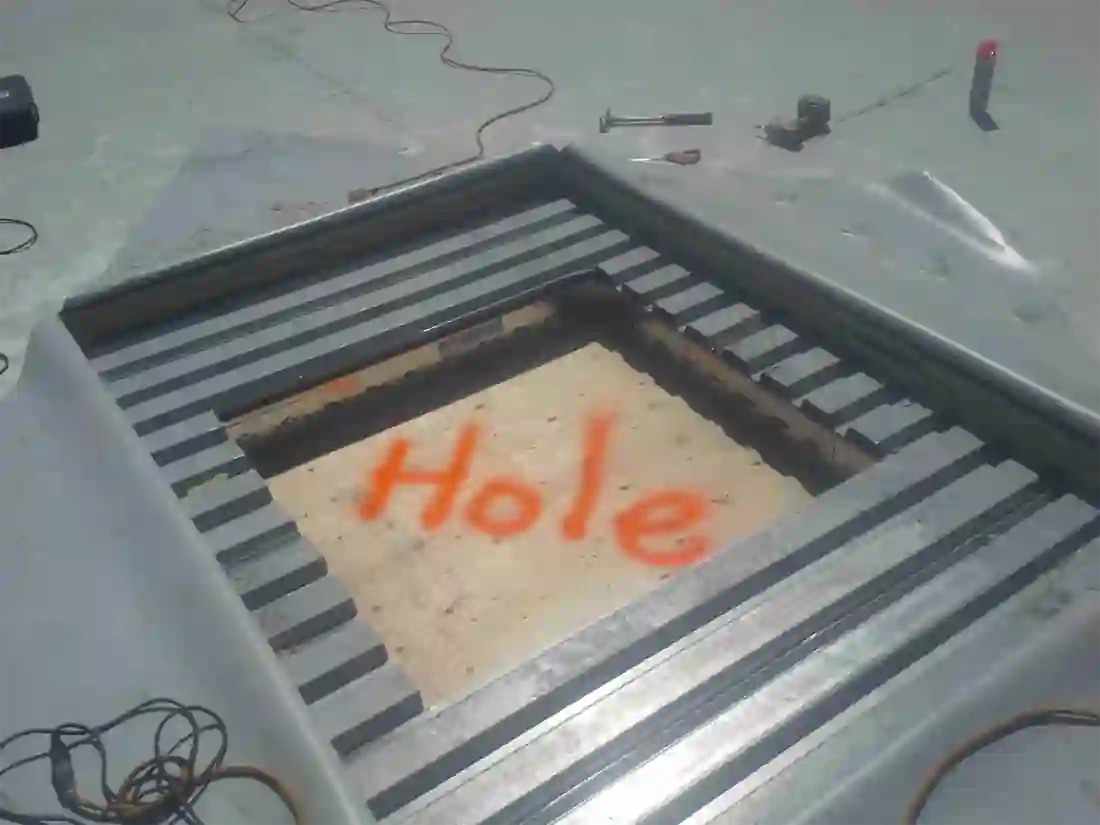
- Rapid, low-disruption rooftop drop-in design: Simply cut the roof penetration, set the SunCooler unit in place, and activate. The on-site installation phase is completed in just one to three weeks with almost no impact on daily warehouse or manufacturing operations. NRWEC produces curb-adaptors to conveniently reuse roof penetrations for the obsolete grid-powered exhaust fans.
- Industrial-grade components built for harsh environments: The SunCooler is serviceable for the life of the building containing name-brands with proven industrial grade performance such as Leeson motors, Balemo actuators, and Deka's premium deep-cycle batteries. The aluminum and steel housing is engineered to withstand coastal salt air, extreme temperatures, and continuous duty cycles. No solar-battery technology in the world competes with NWREC's most advanced battery management charging algorithm allowing maximum ventilation performance and battery life despite the summer's high heat and the winter's long periods of cloudy weather.
- Closed local network
 control using short-range WiFi to a dedicated facility router or fully physical USB-only connection. No internet connection and no cloud exposure that is fully IT-compliant for corporate environments.
 - Full scheduling and real-time environmental monitoring with automated events and downloadable performance history for complete visibility and energy optimization.
Cut roof penetration for SunCooler Install on a High-Bay Commercial Facility
Drop the SunCooler into Roof Opening and Activate
Proven Trust & Reliability in High-Bay Facilities
- ✅ Proven in the field: being used by big-box retailers and military agencies to combat heat related challenges in their high-bay distribution centers and massive high-volume humidity sensitive MRE (Meals Ready to Eat) facilities.
- ✅ Designed and manufactured in the USA: US Patented destratification technology built with industrial-grade components and assembled here in the US.
- ✅ Eligible for federal tax incentives: Qualifies under Section 179D of the Inflation Reduction Act for energy-efficient building upgrades
- ✅ Complements existing HVAC and rooftop units: Works alongside legacy systems to reduce their runtime and frees up valuable electrical capacity by replacing all grid-powered exhaust fans
- ✅ Turn-key service: From Facility Ventilation Study and detailed quote through installation, training, and ongoing support with minimal disruption
Ready to Modernize Your High-Bay Ventilation and Slash Energy Costs?
Cut heating bills with powerful destratification, replace legacy rooftop exhaust fans, and implement a true green climate-adaptation solution. North West Renewable Energy Corporation delivers a complete turn-key package starting from our billable High-bay Facility Ventilation Study and detailed quote through manufacturing, installation, staff training, and seamless hand-off to your maintenance team.
Request High-Bay Ventilation Study & Quote →Call Jason in Sales at 503-515-3317 or email jason@nwrec.us or info@nwrec.us
Frequently Asked Questions
1. What is the ROI of installing SunCooler systems in high-bay facilities?
ROI is a common lens to review renewable technology. The SunCooler is unique and very advanced technology that we would like to shift the perspective from looking at ROI to how it solves many difficult indoor air quality challenges and provides climate adaptation and heatwave resiliency, but we'll also answer the ROI question for whom it applies.
The SunCooler is designed for the life of the building; meaning, it will run indefinitely given routine maintanence because all the parts are serviceable and replaceable. This means the SunCoolers avoid the typical, and very costly, 20year replacement cycle for conventional HVAC. The SunCoolers also lengthen the life of existing HVAC by reducing their cycle time and heat stress which translates to savings. The SunCooler solves an extensive list of your indoor air quality challenges and improving employee performance through better occupant comfort to reduce their absenteeism and turnover. These all translate to real savings, but its more critical to view this as solving a multitute of problems than savings alone.
However these values can be tallied up over time, and if the facility has existing HVAC for the SunCoolers to save up to 30% on heating fuel and replacing grid powered exhaust fans for electrical savings, we can expect a 5 year ROI.
2. Does the SunCooler work alongside our existing HVAC and rooftop units?
Yes. The SunCooler is designed to work alone and also complement existing HVAC systems. It reduces the load on your current equipment by exhausting hot stratified air and pre-cooling the building with nightflush mode, allowing chillers and heaters to run less often and last longer.
3. How does destratification deliver real heating energy savings?
In high-bay facilities hot air rises to the ceiling forcing heaters to work harder to keep the floor comfortable. The SunCooler destratification mode mixes this hot ceiling air with the cool floor level air for a more even temperature mixture. Thermostats will read a higher temperature at the floor level and will reach setpoints faster which translates to less RTU runtime for up to 30% fuel energy savings.
4. Can the SunCooler help with CO₂ management and fresh-air requirements?
Yes. During destratification, for example, you can schedule a controlled fresh-air mix from 0-100% fresh air into the destratification air stream. This allows precise CO₂ management, and optionally maintaining positive building pressure, without compromising the energy efficiency of the facility.
5. Will installation disrupt daily warehouse operations?
Installation is very low-disruption. Nearly all work is performed on the roof with a simple “drop-in” process: cut the roof penetration, set the unit, and activate. Most facilities complete the full installation project in one to three weeks with almost no impact on indoor operations or product flow.
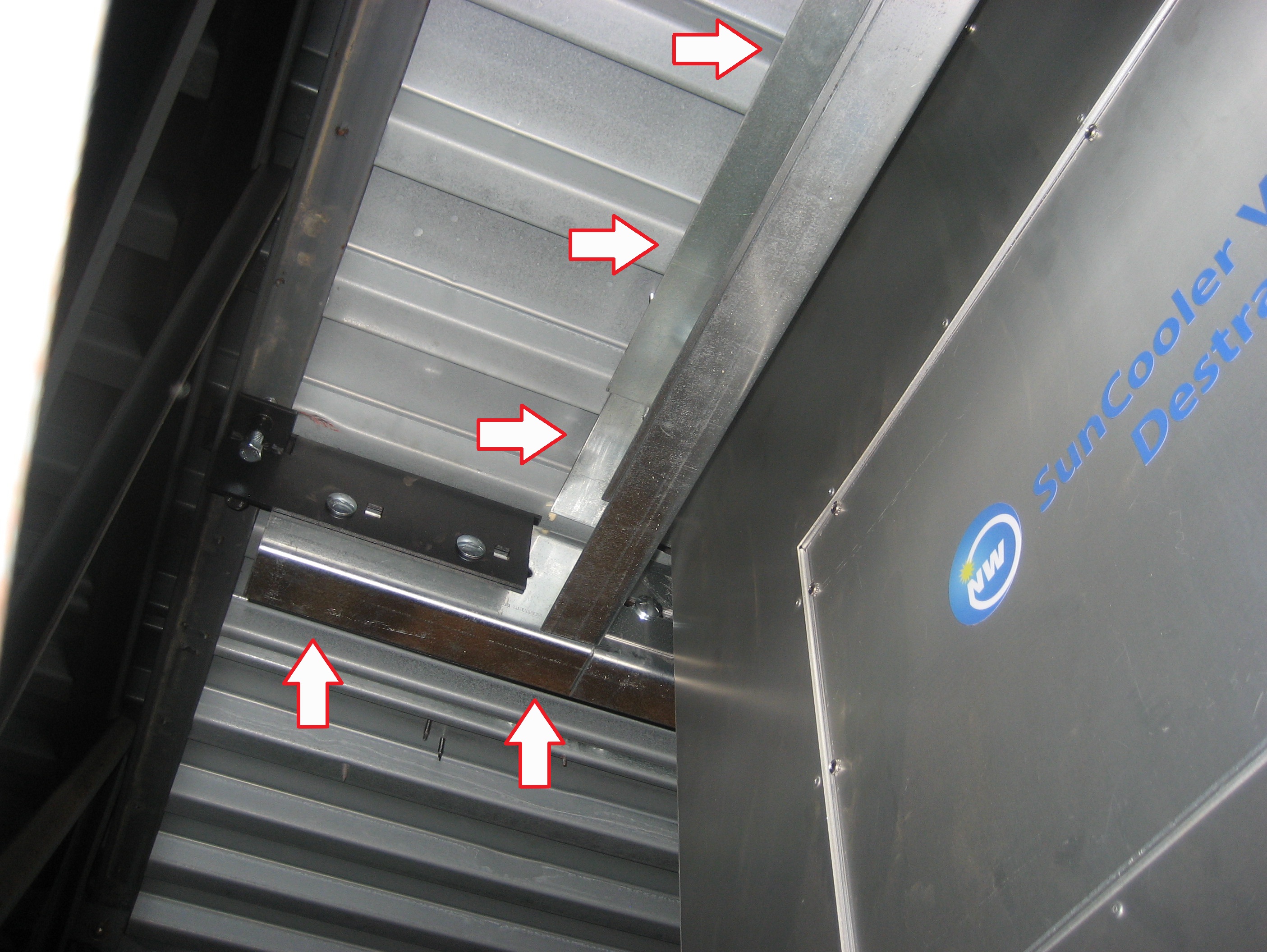
Work inside the facility is limited. For example, the SunCooler is mounted sometimes requires a simple roof support frame to transfer its weight onto the building’s primary supports rather than the roofdeck alone. This requires a szizzor lift team to apply the frame to the ceiling from inside the facility, however this is typically little to no disruption for facility operations.
SunCooler install with support frame for facility structural engineer approval.

6. How secure and IT-friendly is the system for corporate facilities?
The SunCooler uses a proprietary, portable graphical software with windows and buttons (it is not a command-prompt). It is intuitive to operate without training to interpret the display of information and conduct operation schedulin. SunConfig is provided on a laptop for client use.
All SunCooler communications are closed local network with no internet or cloud connection. Control is possible via short-range WiFi to a PC with SunConfig, or to a dedicated facility router where all SunCooler signals are congregated. This design meets strict corporate IT security standards while still providing full scheduling and monitoring capabilities.
With all SunCooler communications wirelessly brought to a single point, facility maintanence may control, monitor, and download log data from every SunCooler.

7. Is the SunCooler eligible for energy rebates, grants, or tax incentives?
Yes. SunCooler systems qualify for federal tax deductions under Section 179D of the Inflation Reduction Act. Because incentives vary by location, clients work with NWREC to discuss these oppertunities to find a customized incentive assessment with every Facility Ventilation Study.
8. How does the system handle 24/7 operation and battery maintenance?
The SunCooler is engineered for continuous duty even in long periods of low sunlight. The solar panel system is oversized and allows full power charging and full motor power during direct sunlight, which means performance, while reduced, remains quite practical during inclimate weather. The proprietary solar-charging and load management algorithms from NWREC are second to none, and you will see useful throughput and continuous duty throughout the year despite high heat and prolonged cloudy weather.
Battery maintenance on the SunCooler is quite simple. After 5-8 years the SunCoolers will simply perform less and less at night until they cannot run at all. Day-time operation will carry on but will follow the sunlight more strongly; such as, the fan speed noticeably slowing down and speeding up from a small cloud covering the sun and then uncovering it. You may simply check the battery name-plate and replace it with that exact model or have NWREC replace with warrenty (recommended). Caution: You cannot put any 12V batteries in the SunCooler. They must be appropriate ampacity, chemistry, and capable of deep cycles. Contact NWREC Engineering and Assessment Department with battery maintenance questions, as NWREC is quite the expert on this subject.
9. Can we scale this to 100–200+ units across multiple facilities?
Yes. The SunCooler scales perfectly for large deployments. More buildings, more SunCoolers! In fact, a single regional distribution center may take 80 to 150 SunCoolers alone and to fulfill several facilities like that can tally up to thousands of SunCoolers across the country. The modular design of the SunCooler means scaling is a matter of adding more SunCoolers to the roof to meet air exchange rate objevtices and indoor air quality and ventilation goals.